Friday, April 15, 2011
Manicotti, or lasagna rolls with vegetables
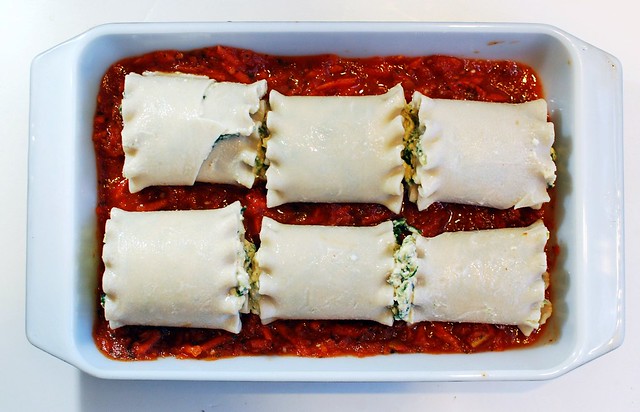
It worked out well, except I forgot that gluten free lasagna noodles are so skinny. Ideally I would have rolled these into long tubes, but the noodles are so skinny that would have been more trouble than it was worth. Instead I rolled these up into fat little rolls, so they're more like rolled up lasagna and less like manicotti. It's got the same flavors, and idea as manicotti, so this is the best I can do without making my own noodles (a project for another time) or buying gluten free manicotti noodles (do those even exist?).
See? Lasagna roll ups. Oh and the best part! I snuck in a bunch of vegetables. Not that I have picky kids or anything, but I haven't been eating enough vegetables (does anyone?) so I added frozen spinach to the cheese filling and shredded carrots to the tomato sauce. Sneaky!
Manicotti, or lasagna rolls
This makes about a dozen rolls, I only baked the six pictured above and froze the rest. When it's time to eat those ones, I will probably stick them straight from the freezer into the oven and bake about an hour or so.
1 box gluten free lasagna noodles (I used these)
1 28oz can of tomato puree
3/4 t salt
1 t chili flakes
1 t sugar
6 cloves garlic, minced and divided
2 T chopped basil divided
2 T tomato paste
1 16oz container of ricotta cheese (Maplebrook is my FAVORITE)
1/4 c grated Parm cheese, plus more for topping
1 bag frozen spinach, thawed and drained well
2 eggs
1/2 t paprika
1/2 t dried oregano
salt and pepper to taste
6 carrots, peeled and grated
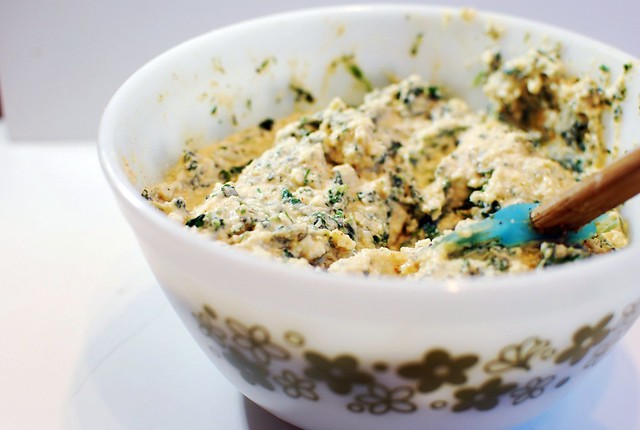
Set a kettle of water to boil and lay the lasagna noodles in a baking dish. When the water comes to a boil, pour it over the noodles, poking them once in a while with a knife to keep them from sticking. Preheat the oven to 350. Combine the tomatoes, salt, chili flakes, sugar, half of the garlic, half of the basil, and tomato paste in a pan and bring to a simmer. Cook until everything else is done. Combine the rest of the garlic and basil, ricotta cheese, parm, spinach, eggs, paprika, and oregano. Add salt and pepper to taste. Check to see if the noodles are softened yet. This might take 15-20 minutes, but be patient. When the noodles are soft enough to roll without breaking them, drain them and rinse them with cold water. Dry them off as best you can with paper towels. Add the carrots to the tomato sauce, then spread enough of the sauce on the bottom of a baking dish to cover it.
Now it's time to roll the noodles! One noodle at a time, spread the filling on 3/4 of each noodle, leaving one end without filling. Roll them up, starting with the side with the filling, and place each noodle roll end side down in the tomato sauce. Repeat with all the noodles. Don't go too crazy with the filling, you just need a thin layer on each noodle, you don't want it to ooze out the sides as you're rolling. Once you've rolled all the noodles, spread tomato sauce all over the top, then sprinkle with cheese. Cover and bake 30 minutes.
Serve with garlic bread and salad, if you have it.
Thursday, June 3, 2010
Peanut noodles and tofu
Monday, July 13, 2009
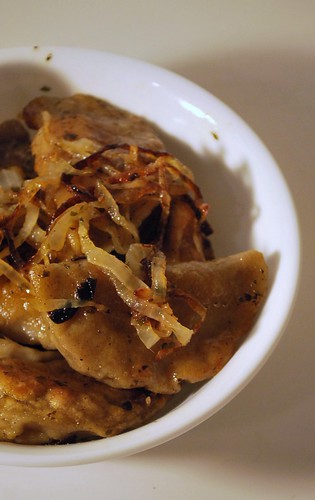
Pierogi(s)
Wednesday, July 8, 2009
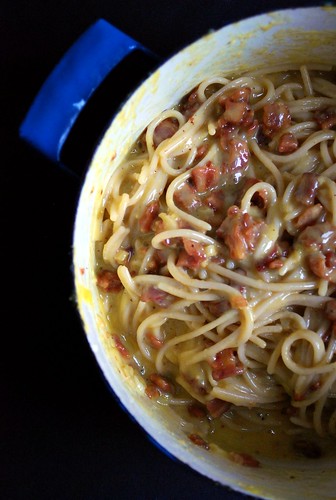
Spaghetti Carbonara
Friday, March 27, 2009
Daring Bakers March- Lasagna!
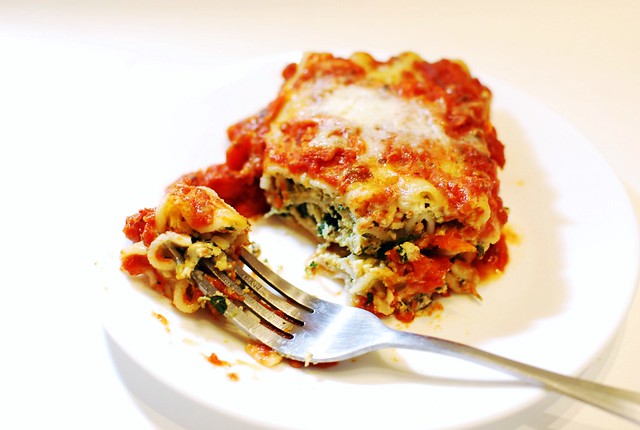
And for the first post in the new house, this month's Daring Baker's Challenge! This month we made lasagna, which was awesome. I made every part from scratch. The noodles, the ragu, the bechemel, the ricotta (see my post on March 13), everything except the mozzarella and Parmesan. And while the whole process took about six hours, it was really, really good. I served this for dinner to some friends, and everyone ate a hefty slice, and then went back for seconds.
The March 2009 challenge is hosted by Mary of Beans and Caviar, Melinda of Melbourne Larder and Enza of Io Da Grande. They have chosen Lasagne of Emilia-Romagna from The Splendid Table by Lynne Rossetto Kasper as the challenge.
Gluten Free Egg Pasta
The choice of the first flour is personal. The original recipe called for corn flour because the subtle taste blended well with the dish. However, this is a matter of personal taste – please feel free to substitute a different flour for the corn flour but don't substitute a starch. I used rice flour and thought that was delicious.
1 c rice flour (or other flour of your choice)
3/4 c corn starch
scant 1 c tapioca starch
1 c potato starch
3/4 c sweet rice flour
1 1/2 t xanthan gum
1 t salt
6 eggs
3/8 cup of water
3 T olive oil
Sift all the dry ingredients together in a large bowl. Make a well in the middle of the dry ingredients.
Whisk together 3 eggs, the water and the oil. Pour into the middle of the dry ingredients. Mix with a sturdy wooden spoon, gradually drawing more of the flour mix into the wet ingredients. Add each egg as needed. The dough will be crumbly at the beginning but will gradually come together as you add the eggs. You will need to use your hands to squeeze and mix the dough.
The dough will be firm and stick together when ready. It will not have the elasticity of gluten dough therefore it will crack when kneaded and pushed. Form it into a smooth ball, oil it lightly, and cover securely with plastic wrap. Let it rest for an hour.
Put a sheet of plastic wrap on your work surface. This is very important as the dough will not hold together very well when lifted. Have flour ready for dusting (I used rice flour) and dust the surface lightly. Cut a piece of dough about the size of really large egg – it doesn’t matter the size but start small for the first one to gauge how much space you need. Keep the remaining dough covered so it does not dry.
Roll the dough into a ball and flatten into a disc with your hands. Put it on your work surface and flatten with your hands. Use a rolling pin and gently push the dough down and out ward from the center. You may have to place one hand on the plastic wrap as you push the dough down and away. Gluten free dough does not stretch like wheat dough therefore it needs gentle flattening and pushing. If it breaks, pat it back together. If it is too dry, dab a little water with your finger. The gluten free dough will be thicker than wheat dough and you will barely be able to see your hand through the dough. Once it is flattened, cut into strips or squares that will fit your pan. Alternately, use a pasta roller, which I did.
Set the dough aside on the plastic sheet. There is no need to dry the dough. But if you do dry the dough, it will not be able to hang because it will break. Stack the rolled out dough with plastic sheets in between.
Stack the sheets when dry and wrap securely. Store in the fridge until ready to use. Freezing will make the dough crumbly and difficult to work with – so freeze only as a last resort!This dough does not need to be precooked before being assembled into the lasagne.
4 T unsalted butter
4 T rice flour (or sorghum flour, if using that use 3 T)
2 2/3 c milk
Salt and freshly ground pepper to taste
1 t paprika
1 c grated cheese (I used mozzarella)
Using a medium-sized saucepan, melt the butter over low to medium heat. Sift over the flour, whisk until smooth, and then stir (without stopping) for 1 minute. Whisk in the milk a little at a time and keep the mixture smooth. Bring to a slow simmer, and stir 3 to 4 minutes, or until the sauce thickens. Cook, stirring, for about 5 minutes, until the sauce thickens. Remove from heat, season with salt, pepper, and paprika, then stir in cheese.
My Version of Country Style Ragu’ (Ragu alla Contadina)
3 tablespoons extra virgin olive oil
1 medium onion, minced
1 carrot, minced
6 cloves garlic
1 lb ground beef
1 lb sausage (I used a mix of sweet and hot)
1 to 1 1/2 lb (total) cubed beef, pork and veal (often sold together in a 'gravy pack')
2 t paprika
1 t thyme
1 c red wine
1 1/2 c chicken or beef stock
2 cups milk
1 can tomatoes, diced
Salt and freshly ground black pepper to taste
Working Ahead:
The ragu can be made 3 days ahead. Cover and refrigerate. It also freezes well for up to 1 month. Skim the fat from the ragu’ before using it.
Browning the Ragu Base:
Heat the olive oil in a deep pot over medium-high heat. Add the onion, garlic, and carrot and sauté, stirring frequently with a wooden spoon, 10 minutes, or until the onions barely begin to color. Add meat to the pan, sprinkle with paprika and thyme, and slowly brown over medium heat (do this in two batches if necessary). First the meats will give off a liquid and turn dull gray but, as the liquid evaporates, browning will begin. Stir often, scooping under the meats with the wooden spatula. Protect the brown glaze forming on the bottom of the pan by turning the heat down. Cook 15 minutes, or until the meats are a deep brown. Turn the contents of the skillet into a strainer and shake out the fat.
Add meats back to the pot, then add the wine, lowering the heat so the sauce bubbles quietly. Stir occasionally until the wine has reduced by half, about 3 minutes. Scrape up the brown glaze as the wine bubbles. Stir ½ cup stock into the saucepan and let it bubble slowly, 10 minutes, or until totally evaporated. Repeat with another ½ cup stock. Stir in the last 1/2 cup stock along with the milk. Adjust heat so the liquid bubbles very slowly. Partially cover the pot, and cook 1 hour. Stir frequently to check for sticking.
Add the tomatoes, and cook uncovered, at a very slow bubble for another 45 minutes, or until the sauce resembles a thick, meaty stew. Season with salt and pepper.
Assemble the Lasagna
1. Lightly grease your lasagna pan. Then pour 3 T water or stock in the bottom of the pan.
2. Spread a thin layer of ragu on the bottom of the pan.
3. Place a layer of lasagna noodles (uncooked!) on the ragu.
4. Top with cheese sauce, more ragu, then a good sprinkling of Parmesan and mozzarella cheese.
5. Add another layer of pasta, then repeat. I had six or seven layers. Keep going until you run out of everything. Cover with a final layer of ragu and cheese.
6. Pour a tablespoon of water or stock down the each of the corners of the pan. Cover tightly with foil, and bake 45 minutes at 350.
7. Remove the foil and bake another 15, until starting to brown just a little. Let rest 15 minutes before you try to cut and serve it (longer is better).
Sunday, March 15, 2009
You call it American Chop Suey, I call it homemade Hamburger Helper
The good news is that this is a really good recipe, and takes maybe a half an hour from start to finish, and is delicious and cheap. It's also really flexible, you can switch out the ground beef for pork or chicken or sausage or whatever you want, and switch up the veggies and cheese.
This dish has as many names as variations.
1 lb ground meat
1 T olive oil
1 onion, diced
4 cloves garlic, minced
one package of mushrooms, sliced (I used shiitake but feel free to use button or crimini or anything else)
2 t paprika (I used one each of hot and smoked but use whatever you have)
1 t chili powder
1 t thyme
salt and pepper
a handful frozen corn
a can (or jar) of tomato sauce (about two cups)
1 c stock (or milk)
pasta of your choice (I used about 6 oz of Mrs Leepers rice spirals)
1 c shredded cheese (or more, cheddar or mozzarella are good)
Optional: more vegetables, such as diced carrots or peppers, sliced green beans, or any other vegetable you like. You can also splash in a bit of Worcestershire sauce if you'd like.
Heat the oil in a large pan (big enough to hold everything). Add the beef and brown, about 10 minutes. Remove the beef to a bowl, draining off all but about a tablespoon of fat. Return the pan to the heat and cook the onions until softened, then add the garlic and mushrooms and cook until the mushrooms are starting to brown, but nothing is burning. Add any other vegetables (except frozen corn or peas) that you're using with the mushrooms. Add the paprika, chili and thyme, some salt and pepper, and stir to coat. Add the meat back in, add the corn, and then dump in the sauce and stock and bring to a simmer. Add the pasta, cover, and cook 8-10 minutes, until the pasta is cooked. Stir in cheese right before serving, and then sprinkle with another bit of cheese when you're plating. This makes enough to serve 4 (recipe can be halved or doubled).
Friday, January 23, 2009
Three cheese and sausage lasagna
Sunday, January 11, 2009
Macaroni and cheese pancakes
Sunday, March 9, 2008
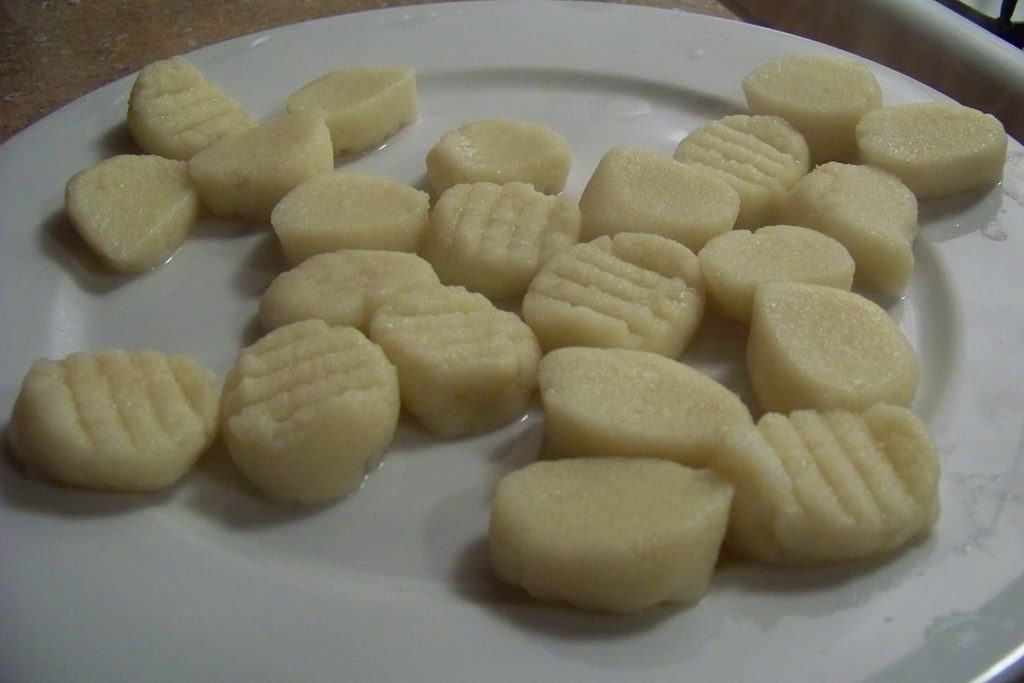
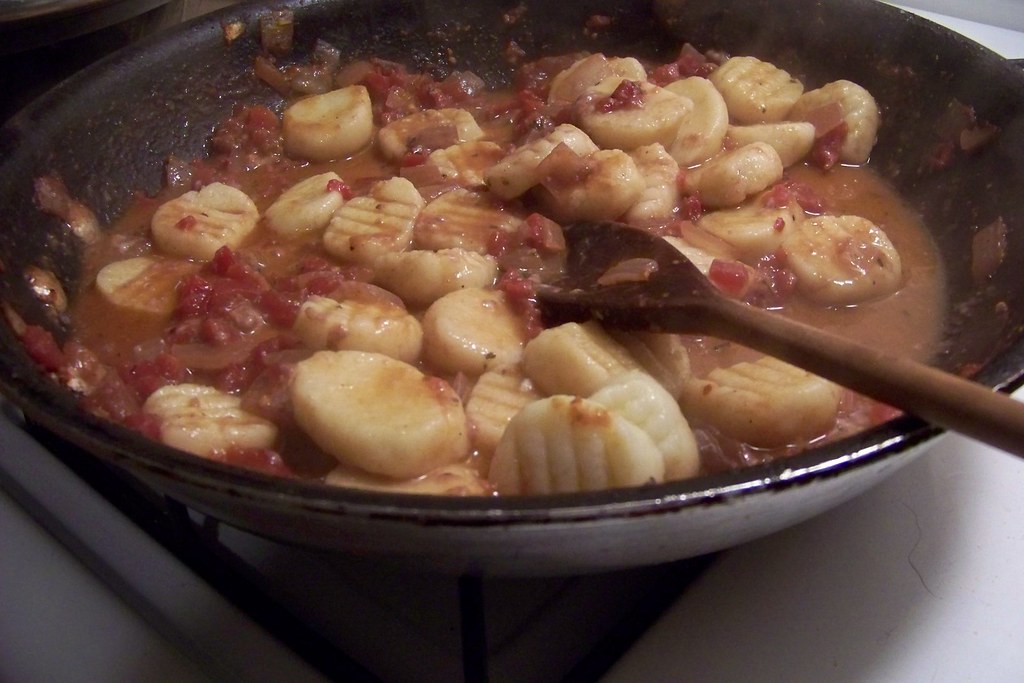
Gnocchi!!!!!
Yesterday was a storm that seemed like the end of the world. I took a nap yesterday after work and ten minutes later I was woken up because the sky was falling. It was 50 degrees and sleeting like I'd never seen, then it stopped, the sun came out, and then a few hours later the sky turned black. And got cold. It was weird. Anyway, I made a special meal for Alex last night, I cooked mussels for the first time (Ma, they came out great!!) and made gnocchi on the side. I've made them before since going gluten free, once, and liked them a lot, but I saw a new recipe I wanted to try on the glutenfreeda site. It turned out to not work for me, maybe because I wasn't using a bread-mix flour. Oh well, I experimented and came out with perfect, fluffy, gnocchi anyway. Take that!
2 lb russet potatoes (about 3)
about 2 cups of flour mix
1 t salt
1/2 t xanthan gum
1 egg
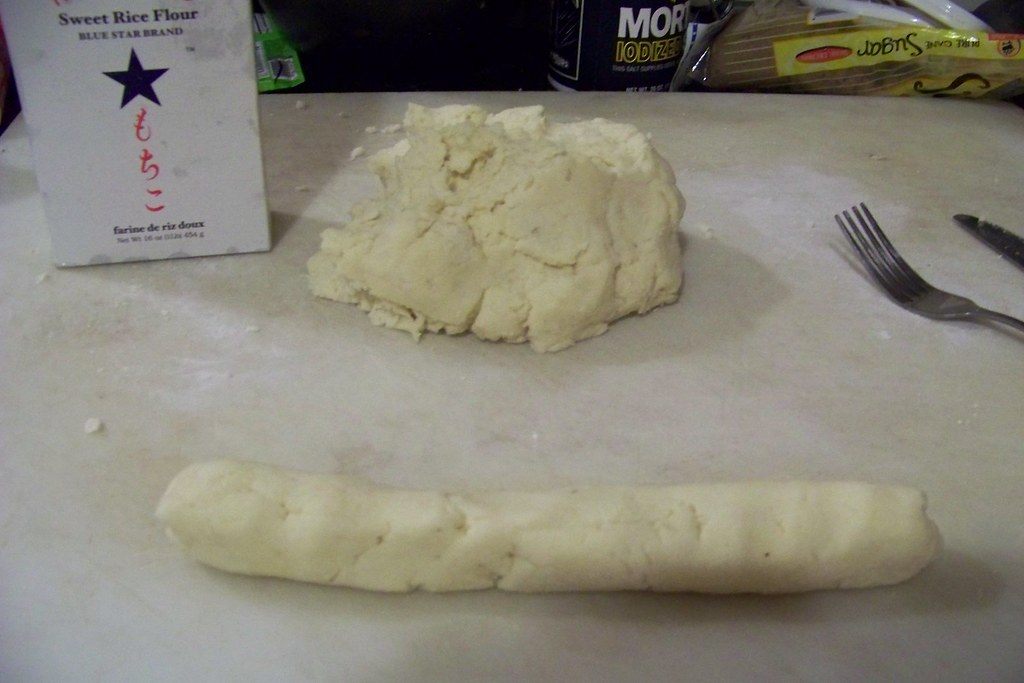
Scrub potatoes clean, then poke holes in them and bake at 400 for about an hour, until they're cooked through. Split in half and let cool for a while, then add salt and mash them or put them through a ricer (I don't have one, I mashed mine, but all the recipes I've seen say rice them!!!!). Let cool fully. Mix in egg, then add 1 c flour mix and xanthan gum, then keep adding a few tablespoons at a time until the dough holds together. Dust a cutting board with flour (I used sweet rice) and knead the dough for a few minutes. Break off manageable hunks (about fist sized) and roll into snakes about 3/4 inch thick. If your dough won't roll well, try squeezing it through your hands to thin it out, then rolling to smooth the finger-squeezing marks. Once you have a decent shaped snake of dough, cut into pieces, depending on how thick your snake is.
Sunday, November 4, 2007
tuna noodle casserole and twice baked (christmas) potatoes
Tuna Noodle Casserole
This makes enough to serve 2, with one second helping. I didn't want leftovers in the fridge. You can double it for more people.
1/2 onion, diced
2 stalks celery, diced
2 cloves garlic, minced
4 T butter
1 1/2 T sweet rice flour
1 c milk
salt and pepper to taste
about 1 c cheese (your choice, I used cheddar)
1/2 c breadcrumbs
1 can tuna
1 1/2 c rice pasta
2 potatoes, scrubbed and pricked all over with a fork
2 T butter
salt and pepper to taste
1/3 c milk
1 c cheese (your choice, I usually use cheddar and parm, I used a really good aged Gouda this time and it was awesome), grated
a little hot sauce
Microwave the potatoes, on a paper towel, for about 10 minutes, turning halfway through, until fork-tender. Preheat the oven to 350. Cut potatoes in half the long way, and scoop out the insides carefully into a bowl, trying not to break up the skin. Place the 4 skin boats onto a cookie sheet. Mash the potatoes with the rest of the ingredients, then scoop the mix into the skins. Sprinkle with a little more cheese if desired, then bake about 20 minutes until beginning to brown.
Friday, June 8, 2007
Friday, summer.
Scallion Pancakes
1/2 t xantham gum
1 c flour (I use brown rice flour mix)
1 1/4 c water
1/2 t salt
scallions, chopped
2-4 T veg oil
mix the first 4 ingredients together, add scallions, cook as you do regular pancakes in veg oil.
Gnocchi
2 lbs potatoes
1 c rice flour
3/4 c potato starch
1/4 c cornstarch
1 T butter
1 T Parmesan cheese
1 egg, beaten
1/2 t xantham gum
Prick potatoes all over and bake at 400 degrees for 45 mins to 1 hour, turning halfway through.
Peel potatoes and grate them (or mash) into a large bowl. Add eggs, salt, and mix with a wooden spoon.
Add flour a little at a time until dough won't stick to your fingers. When flour has been incorporated, bring dough together with your hands.
Knead on a lightly floured surface.
Form the dough into a ball and then divide into 6 balls. Roll each ball into a rope 3/4" thick, then cut each rope into 1" pieces. Make ridges on each with a fork, drop into boiling water until they float, or freeze on a cookie sheet, transferring to a bag once frozen.